Mattress guide · Construction, comfort & fit
What to Know About the Vispring Baronet Superb
A mattress is not simply a soft place to land at the end of the day. It is a carefully layered surface whose springs, upholstery, proportions and finish all influence how it feels in use. The Vispring Baronet Superb brings a traditional pocket-spring approach together with natural-fibre upholstery. Understanding those details—and testing them against your own preferences—can make a comparison more useful than relying on a name, a photograph or a firmness label alone.
A practical, non-commercial guide to evaluating the Baronet Superb and deciding whether its construction suits your sleep habits.
Start with the mattress in front of you
Before assessing comfort, confirm the exact product configuration. Mattress specifications can vary according to size, market, retailer or production update, and a model name does not necessarily communicate every detail. Check the current information supplied for the particular Baronet Superb you are considering: its spring count for your size, available spring tensions, upholstery materials, overall depth, care guidance, delivery arrangements and warranty terms.
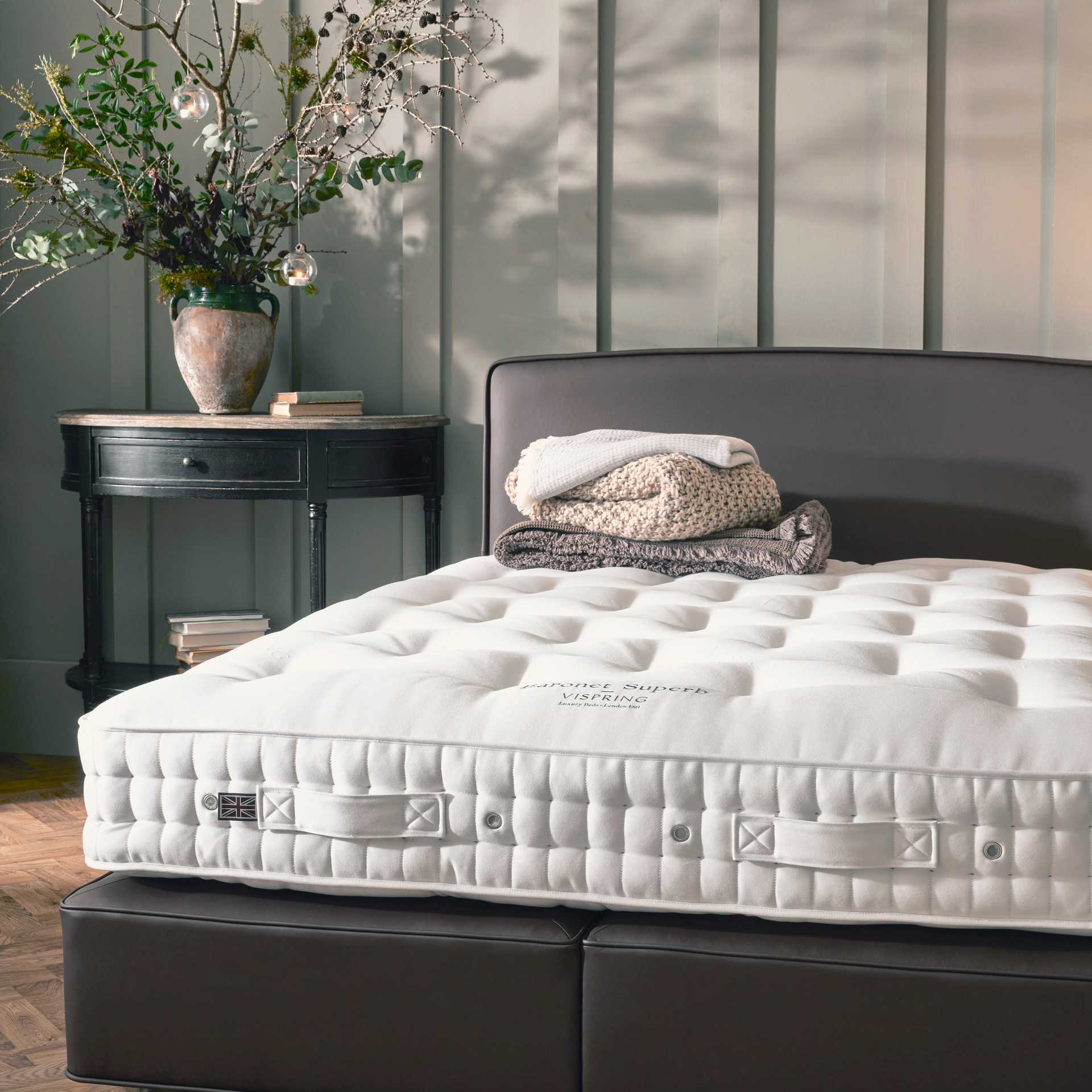
The available product information describes the Baronet Superb as an entry point to the Vispring collection, while retaining construction principles associated with the range. It lists Vanadium steel pocket springs individually nested in calico, natural-fibre upholstery, hand finishing and hand side-stitching at the border. In a King size, the listing specifies 1,716 pocket springs. That figure is a model-and-size detail, not a universal number for every size or configuration, so it is worth confirming against the current specification sheet.
These terms describe how a mattress is built; they do not, by themselves, guarantee that it will feel right to you. “Hand-nested,” “natural fillings” and “pocket spring” are useful starting points for questions, not substitutes for lying on the mattress and considering your own sleep needs. The central task is to translate construction into likely experience, then check that experience in person whenever possible.
How its construction may shape the feel
Pocket springs and individual response
In a pocket-spring mattress, springs sit in individual fabric pockets rather than being joined together as one continuous coil unit. This arrangement allows springs to respond more independently to pressure. In everyday terms, the surface may respond more locally as a sleeper changes position, rather than moving as a single connected spring structure. How noticeable that feels depends on the spring system, upholstery, bed base, body weight, sleep position and the movement of another sleeper.
The Baronet Superb’s listing identifies Vanadium steel as the spring material and describes the springs as hand-nested in calico. Steel composition and construction are technical details; a shopper does not need to interpret them as a promise of a particular sleep outcome. Instead, use them to guide a showroom trial. Notice how readily the mattress responds when you turn, whether you feel supported when lying still, and whether motion from a companion is perceptible to you. Individual preferences differ, so one person’s impression of buoyancy or isolation may not match another’s.
Four tensions, and the meaning of firmness
The product description lists four spring tensions: Soft, Medium, Firm and Extra Firm. These labels offer a useful framework for narrowing a trial, but firmness is not a standardized sensation across all mattress makers. A “Medium” from one range may not feel identical to a “Medium” elsewhere, and even within a single model, the upholstery and size can affect the overall impression.
Try to distinguish firmness from support. Firmness is the immediate sensation at the surface; support concerns how the mattress holds your body in a comfortable, stable position over time. A surface can feel plush at first contact while still providing substantial underlying resistance, or feel firm without being suitable for a particular sleeper. Give your body time to settle during a trial rather than making a decision from the first few seconds of sitting on the edge.
For couples, the listing notes that King sizes may be specified with split firmness across the width. This can be worth asking about when two people have different comfort preferences. Confirm whether this option is available for the exact size and configuration, how the division is constructed, and whether it changes the feel at the centre. A split arrangement is not automatically the right solution for every household; both sleepers should test the practical experience.
Natural-fibre upholstery and temperature
Above the springs, the described upholstery includes a bonded British fleece wool and cotton layer, with a blended British fleece wool and cotton layer beneath it. These fibres are presented as breathable and able to manage moisture. In a mattress, upholstery layers influence the first impression of softness, the way pressure is distributed at the surface and how the sleep environment feels over a night.
Natural materials can be appealing to people who value their texture, composition or traditional use in bedding. Yet “natural” should not be read as a guarantee that a mattress will feel cool, suit every sensitivity or require no maintenance. Perceived temperature is shaped by multiple factors: room conditions, sleepwear, sheets, duvet weight, personal physiology and the bed base, as well as the mattress itself. If heat is a concern, test the mattress with bedding similar to what you use at home and ask the seller for precise material and care information.
The product information says the fillings compact slowly and are intended to maintain the mattress profile over time. All upholstered materials can change with use, however, and no construction detail eliminates ordinary wear. Ask about recommended rotation or other care instructions, and follow the current manufacturer guidance rather than assuming that every mattress should be turned or rotated in the same way.
The edge, tufting and ventilation: details worth noticing
A mattress is experienced across its full surface, not only in the middle. The Baronet Superb description specifies a hand side-stitched border in two rows, intended to bind the spring perimeter to the upholstery and help the edge retain its shape. For a buyer, the practical questions are simple: does the edge feel stable when you sit down, and does it remain comfortable when you sleep close to it? Consider the way you use the bed, including whether you sit there to dress or share the surface with a partner.
Hand tufting with felt washers is also part of the listed construction. Tufting draws layers together at intervals, helping hold upholstery in place. You may see or feel small raised points on the mattress surface. Ask the retailer to explain what is normal for this model and whether the display has been used for a long time. The presence of a traditional finishing detail is informative, but its value is best judged alongside comfort, construction information and the terms of sale.
Air vents in the border are listed as a way to support passive ventilation through the mattress. Ventilation can be one component of moisture management, but it should not be confused with active cooling or treated as a promise that a sleeper will never feel warm. The described mattress depth is 8.3 inches, plus 2.4 inches of natural doming. Confirm the total height for the exact version, and make sure it works with your bed frame, headboard, fitted sheets and any mobility considerations in your household.
A showroom trial that tells you something
A considered trial is less about declaring a mattress comfortable after one minute and more about observing how it behaves under familiar conditions. If possible, visit when you are not rushed. Wear clothing that allows you to move easily, remove bulky outerwear and lie in your usual sleep positions. Give each candidate enough time for your body to settle, and repeat the test if an initial impression is unclear.
- Try your usual position. Lie on your side, back or stomach as you normally do. Notice whether the surface feels comfortable at the shoulder, hip and other points where your body meets the mattress.
- Change position deliberately. Roll from one side to another and observe whether movement feels easy, resisted or disruptive. There is no single preferred response; what matters is your own comfort.
- Check the whole surface. Test the middle, edges and the area where you are most likely to sleep. If you share the bed, try the mattress together and separately.
- Compare tensions side by side. If several options are available, keep the comparison focused. Note which feels best rather than relying on the label alone.
- Ask to see the specification. Confirm size-specific spring information, upholstery composition, mattress depth and whether any split-tension option applies to your order.
- Record your impressions. A few notes about pressure, ease of movement, warmth and edge feel can be more useful than a general memory of “soft” or “firm.”
For couples, a joint trial matters. Each person should spend time in their own usual position and pay attention to motion, space and the feel at the centre of the bed. A mattress that seems ideal to one sleeper may not be a comfortable compromise for another. If there is a split-firmness option, test it rather than assuming it will resolve every difference.
Match the mattress to your sleep habits
Sleep position is one useful part of the decision, but not a complete formula for selecting a mattress. Side sleepers may be especially attentive to how the surface feels around the shoulder and hip. Back sleepers may focus on whether they feel evenly supported in their preferred posture. Stomach sleepers can consider whether the surface lets them rest comfortably without unwanted sagging. These are observations to make during a trial, not medical rules or guarantees based on a category label.
Also consider how you move during sleep, whether you tend to share the bed, and what you already know about your comfort preferences. Someone who enjoys a responsive surface may have a different reaction to the Baronet Superb than someone seeking an enveloping or very cushioned sensation. If you are replacing an old mattress, remember that its wear may have altered your reference point. A new model can feel unfamiliar even when it is a better fit.
People with ongoing pain, a diagnosed sleep condition or significant mobility needs may want to discuss mattress choices with an appropriate health professional. A mattress is not a treatment, and general buying guidance should not be mistaken for medical advice. The goal of a showroom visit is to evaluate comfort and fit—not to make claims about curing a health problem.
Compare it with other Vispring models thoughtfully
When comparing the Baronet Superb with other Vispring models, resist the temptation to treat a higher position in a range as an automatic measure of suitability. Models may differ in spring architecture, filling combinations, depth, finishing details and price. More layers or a greater number of listed materials do not necessarily mean a better match for a particular sleeper. The useful question is what each difference changes for you.
Build a comparison around the same practical criteria for every model: spring design, available tensions, upholstery materials, mattress height, edge construction, care instructions, size options, trial policies and warranty coverage. If a specification uses unfamiliar terms, ask the retailer to explain them plainly. A product description should make it possible to understand what is inside the mattress and what the listed details might mean in everyday use.
The [Vispring Baronet Superb](/products/vispring-baronet-superb-789) is described as combining individually pocketed Vanadium steel springs, wool-and-cotton upholstery and hand-finished construction. Use that description as a guide to the questions you ask, then compare the answers with the current specifications of any alternatives. It is the relationship between construction, tested feel and household needs—not prestige or terminology alone—that makes a comparison worthwhile.
Delivery, setup and ownership are part of the decision
A mattress can be well chosen and still become frustrating if it does not fit through the entryway or work with the intended base. Before ordering, measure the room, access route, stairs and bed frame. Confirm the mattress dimensions, finished height, delivery method and whether old bedding or packaging will be removed. If the mattress will sit on a particular foundation, ask whether the manufacturer specifies a compatible base and whether that base affects warranty coverage.
Check the written terms for delivery, setup, exchange or trial periods, returns, warranty duration and the procedure for reporting a concern. Understand any exclusions, fees or requirements for proof of purchase. A showroom conversation can be helpful, but important conditions should be confirmed in writing before you commit. Warranty coverage and comfort guarantees are different things: one generally concerns specified product defects, while the other may be governed by a separate retailer policy.
Ask how to care for the mattress from the outset. Some models should not be turned; some may have rotation guidance; cleaning methods can vary with upholstery. Avoid using a cleaning product or applying moisture without checking the current instructions. Keep a note of the order date and retain the product and warranty documents. These small habits make ownership more straightforward and help you follow the intended care routine.
A measured checklist before you decide
Before choosing the Baronet Superb, make sure you can answer a few questions with confidence:
- Have I verified the current specification for the size and configuration I intend to buy?
- Do I understand the difference between the listed spring tension and the overall feel I experienced?
- Have I tried the mattress in my normal sleep positions for long enough to form a considered impression?
- If I share the bed, have both sleepers tested it and discussed any difference in preference?
- Does the mattress height work with my bed frame, sheets, room access and day-to-day needs?
- Have I checked the foundation requirements, care guidance, delivery arrangements and written terms?
- Can I explain why this construction feels more suitable to me than the alternatives I tried?
The considered conclusion
The Vispring Baronet Superb is presented as a traditional pocket-spring mattress with Vanadium steel springs, calico pockets, wool-and-cotton upholstery and hand-finished details. Its listed options—including four spring tensions and, for King sizes, the possibility of split firmness—give shoppers concrete features to investigate. Those specifications can help frame a decision, but they cannot tell you exactly how the mattress will feel in your home.
Give equal attention to construction and lived experience. Verify what is being sold, test it in person if possible, involve a sleep partner in the trial and review the practical details before ordering. A thoughtful mattress choice is not a search for the most impressive list of materials. It is a search for a sleep surface whose feel, support, dimensions and ownership terms make sense for the people who will use it, night after night.